Habitat -
Roseate Spoonbills are found in shallow wetlands, marshes, mangrove swamps, tidal ponds, and along the edges of lakes and streams throughout Florida. They prefer shallow-water areas where they can easily search for food.
Diet -
They find food by sweeping their partially open bills from side to side through the water. Sensitive touch receptors inside the bill help them detect prey even when the water is cloudy.
Lifespan -
Roseate Spoonbills typically live 10–15 years in the wild, although some may live longer under favorable conditions.
Special Behavior -
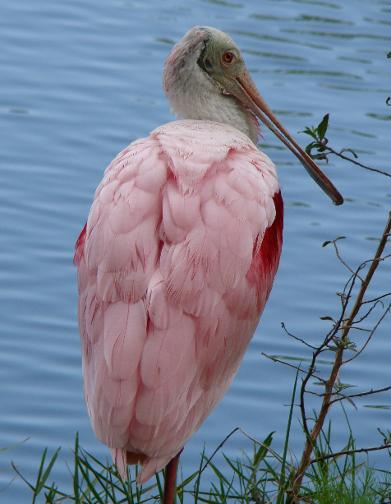
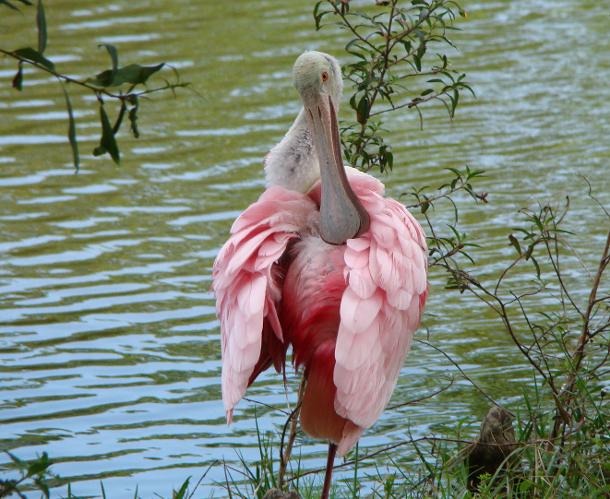
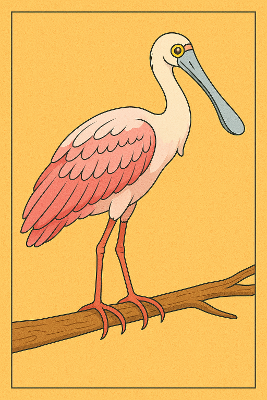
Roseate Spoonbills are famous for their bright pink feathers and unique spoon-shaped bills.
Their pink coloration comes from pigments found in the shrimp and other small aquatic animals they eat.
They often feed in groups, slowly wading through shallow water while sweeping their bills back and forth.
These birds are highly social and frequently nest and roost in colonies with herons, egrets, ibises, storks, and cormorants.
During the breeding season, adults develop brighter pink plumage and colorful patches of bare skin on their heads.
Nesting -
Roseate Spoonbills build large stick nests in trees and shrubs located near water. The nests are lined with grass, leaves, and other soft materials. Both the male and female help build the nest, incubate the eggs, and care for the young after they hatch.
Conservation Story -
In the late 1800s and early 1900s, Roseate Spoonbills were heavily hunted for their beautiful feathers, which were used to decorate ladies' hats and fans. Habitat loss also reduced their numbers. Thanks to legal protection and conservation efforts, spoonbill populations have recovered, and they are once again a common sight in many parts of Florida.
Fun Fact -
Because of their bright pink color, many people mistake Roseate Spoonbills for flamingos. However, spoonbills are a distinct species and can be easily identified by their distinctive spoon-shaped bills.
Bird Watcher's Tip -
Look for Roseate Spoonbills feeding in shallow water during the early morning or late afternoon. Their bright pink feathers often glow beautifully in the sunlight, making them one of Florida's most colorful birds.