Habitat –
Red-winged Blackbirds are commonly found in marshes,
wetlands, ponds, roadside ditches, and grassy fields throughout Florida. They
are especially attracted to areas with tall reeds, cattails, and other wetland
vegetation where they can perch and build nests.
Diet –
Insects
and spiders
Seeds
and grains
Small
fruits and berries
Occasionally, aquatic insects found near wetlands
During spring and summer, they eat more insects to help feed
their growing chicks.
Lifespan –
Most Red-winged Blackbirds live about 2–5 years in the wild,
although some have been known to live more than 15 years.
Special Behavior –
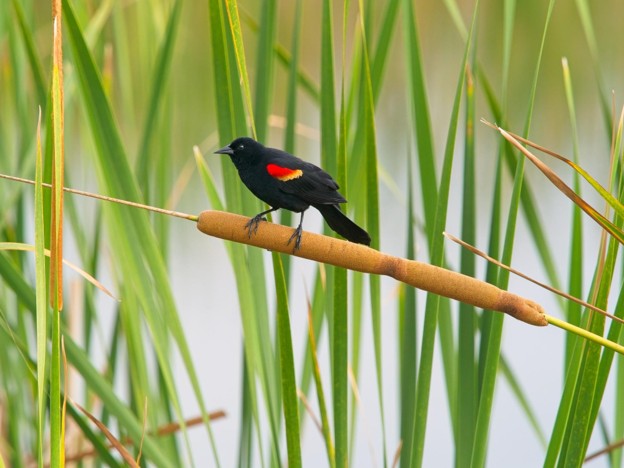
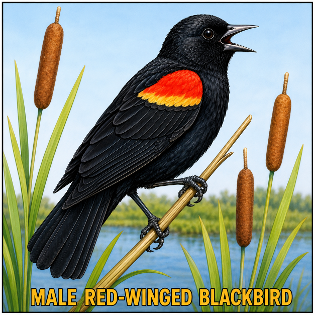
Male
Red-winged Blackbirds are easy to recognize by their glossy black feathers
and bright red-and-yellow shoulder patches called "epaulets."
Males
are very territorial and will loudly sing "conk-la-ree!" from
the tops of reeds and fence posts.
They
often chase away much larger birds that come too close to their nesting
area.
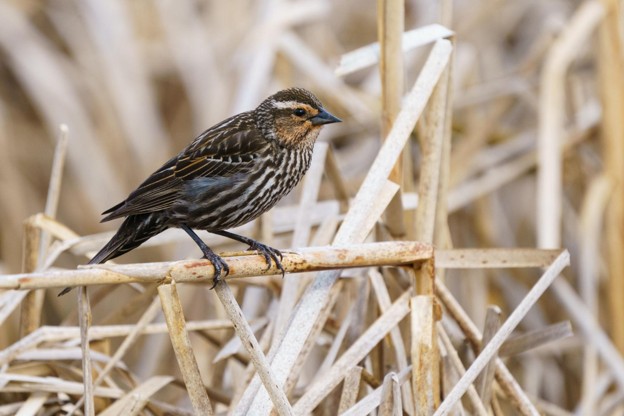
Females
look completely different from males. They are brown and streaked, helping
them blend into marsh vegetation while nesting.
Red-winged
Blackbirds often gather in large flocks during fall and winter, sometimes
with thousands of birds feeding together.
Fun Fact –
The Red-winged Blackbird is one of the most widespread and
abundant birds in North America. If you walk near a Florida marsh in spring,
chances are you'll hear its distinctive song before you see it!
Bird Watcher's Tip –
Look for males perched on cattails or fence posts showing
off their bright red shoulder patches. Their colorful markings make them one of
the easiest wetland birds to identify.